Receiving Australian dollars in the Eastern Caribbean
What East Caribbean dollar actually arrives in the Eastern Caribbean when someone sends Australian dollars, at the live mid-market rate. We explain the process; we never recommend a provider.
1 AUD =
1.9042XCD
▼ -0.01%
STRUCK 11:00 AEST · TUE 13 OCT
1.9821.9391.8959
16 Jul31 Aug13 Oct
What you receive at the mid-market rate
They send (AUD)
You receive at mid-market (XCD)
500 AUD
952 XCD
1,000 AUD
1,904 XCD
2,000 AUD
3,808 XCD
5,000 AUD
9,521 XCD
Mid-market equivalents, not transfer quotes - the sender’s provider deducts its margin and any fees before the money reaches you. STRUCK 11:00 AEST · TUE 13 OCT.
Currency reference
The Eastern Caribbean
CURRENCY · EAST CARIBBEAN DOLLAR (XCD · $)
The East Caribbean dollar is issued by one central bank for a group of small island states and has been held at a fixed rate against the US dollar since the 1970s, one of the longest-standing pegs anywhere. That stability means this corridor moves with the Australian dollar and almost nothing else.
MEMBER STATES
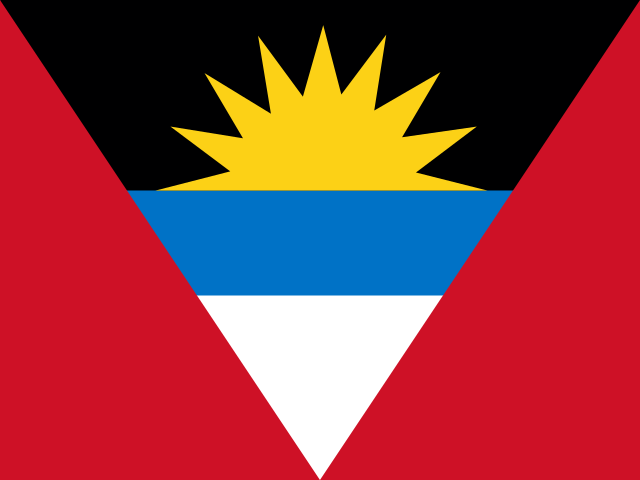
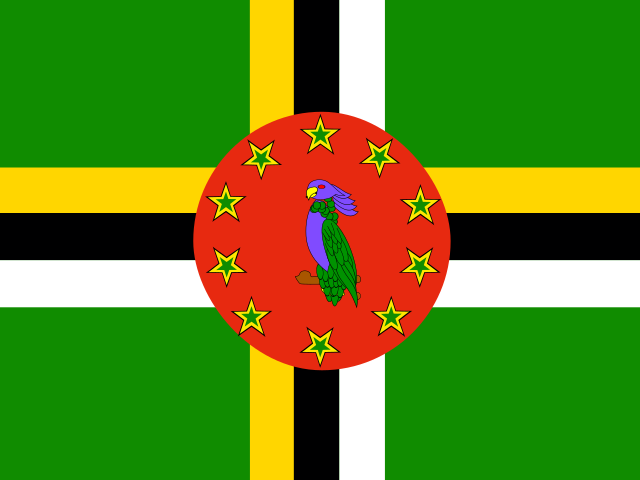
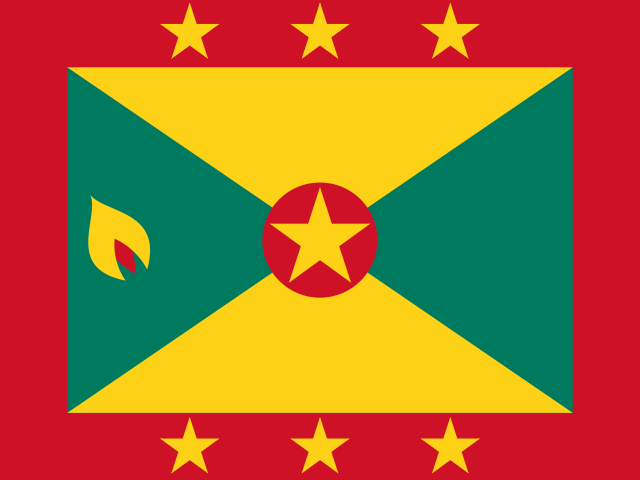
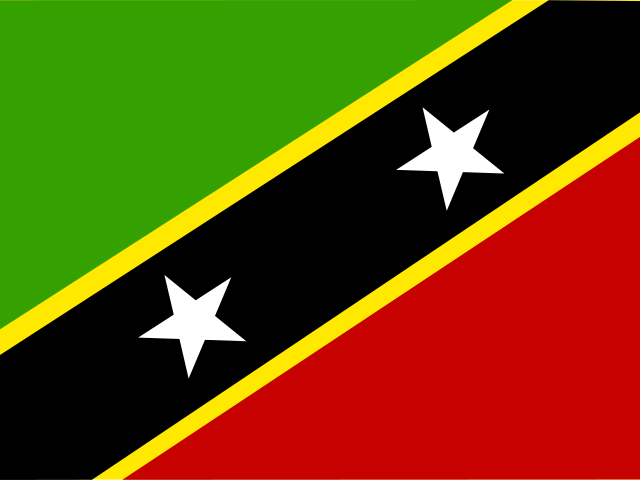
Antigua and Barbuda, Dominica, Grenada, Saint Kitts and Nevis, Saint Lucia, Saint Vincent and the Grenadines
A continent pretending to be a country - Australia is the only nation that fills an entire continent, with most of its 27 million people clinging to the coast while the red-dirt interior does its own thing.
It's home to the Great Barrier Reef, the largest living structure on Earth.
Around 80% of its mammals, including the kangaroo and koala, live nowhere else on the planet.
Canberra was purpose-built as a compromise capital because Sydney and Melbourne couldn't stop arguing over the honour.
It has more kangaroos than people.
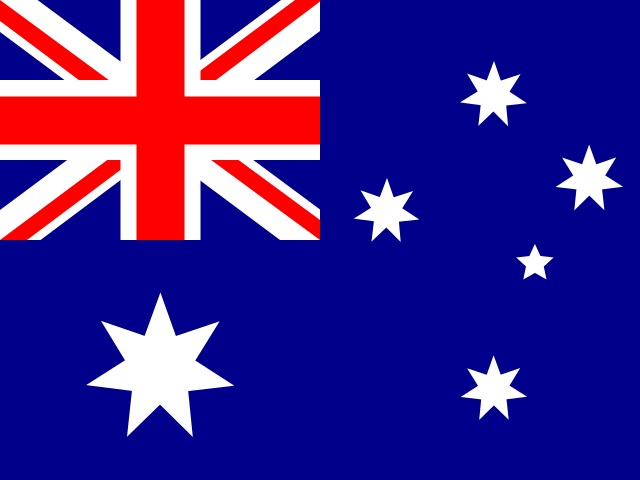
WHAT THE FLAG MEANS
A blue field with the Union Jack in the canton, a large white seven-pointed Commonwealth Star below it, and the five white stars of the Southern Cross at the fly. Six of the big star's points stand for the states and the seventh for the territories; the Southern Cross marks Australia's place in the southern sky.
Population SOURCE Wikidata · flag meaning audited against each country’s own governing instrument · flag: flag-icons (MIT)
The receiver’s side of this corridor
One currency, one central bank, six independent countries: the East Caribbean dollar is issued by a single regional authority for Antigua and Barbuda, Dominica, Grenada, Saint Kitts and Nevis, Saint Lucia, and Saint Vincent and the Grenadines. Its link to the US dollar is among the longest unchanged anywhere, so the same quote applies wherever the recipient lives.
The exchange rate is set on the sending side - by the service the sender chooses in Australia - so the most useful thing a receiver can do happens before the transfer: share the live mid-market rate on this page so the sender can judge the margin in their quote. How the money arrives in the Eastern Caribbean determines any local receiving charges - bank-to-bank transfers can pass through intermediary banks that deduct handling fees.
Regional clearing, national licensing, and which island you are in
Clearing in the Eastern Caribbean is regional and paying money out is not. The Eastern Caribbean Central Bank established the Eastern Caribbean Automated Clearing House jointly with the licensed commercial banks of the currency union, completing cheque imaging across all eight territories in March 2015 and moving on to electronic funds transfers denominated in East Caribbean dollars. A payment between islands therefore clears on one shared piece of infrastructure. The counter that hands the money over does not: Antigua and Barbuda and Saint Lucia each license money services business under their own legislation.
Those regimes are not merely separate, they are drawn differently. In Antigua and Barbuda a Class A money services licence permits the holder to transmit money or monetary value, with Classes B to F defined separately. In Saint Lucia a Class A licence is the composite one, covering transmission together with money orders and travellers cheques, cheque cashing and currency exchange. Same currency, same central bank, and the licence class named on the door means two different things. The registers are national too: Antigua and Barbuda's regulator publishes a directory naming every licensee, its class, its sub-licensees and each physical address.
The identifier a sender needs follows the same national pattern rather than the currency. Of the eight jurisdictions the East Caribbean dollar serves, exactly one appears in the ISO 13616 registry: Saint Lucia, whose account number runs to thirty-two characters and has been registered since April 2007. It is the second longest entry in the registry anywhere, behind only the Russian Federation. Antigua and Barbuda, Dominica, Grenada, Saint Kitts and Nevis, Saint Vincent and the Grenadines, Anguilla and Montserrat are all absent from the registry. Which island the recipient banks on decides which of those two conversations the sender is about to have.
How much East Caribbean dollar will I receive in the Eastern Caribbean?
A little less than the mid-market figures above. The service the sender uses in Australia sets the rate and fees; local receiving banks in the Eastern Caribbean can also apply their own charges depending on how the transfer arrives.
The sender asked for my details - what will they need?
Whatever their transfer service asks for on the receiving side - typically your full legal name and local bank account details in the Eastern Caribbean. Give the name exactly as your bank records it; mismatches are the most common reason a transfer is delayed.
Why did I receive less than the rate on this page suggests?
A quote is the mid-market rate with the provider’s margin taken out of it. Because that margin is expressed in the rate rather than itemised, it is easy to miss and is usually the bigger half of what a transfer costs. On a bank-to-bank transfer an intermediary bank can also deduct a handling charge in transit.